


How to choose weighbridges/ truck scales?
Release time: 2025-11-12
When selecting a weighbridge, multiple factors must be considered to choose the product that best meets your needs. Here are some key selection points and steps:

Ⅰ、Core parameters – Clarify your primary requirements
1,Maximum weighing capacity
This is the most critical parameter. What is the maximum weight that needs to be weighed?
Not only should the maximum weight for a single weighing be considered (such as a fully loaded truck), but also the potential business growth in the future and whether a larger tonnage is needed.
Suggestion: Choose a weighbridge that is 10% -20% higher than your actual maximum demand to avoid long-term full load operation, extend sensor life, and improve accuracy stability. For example, if you need to weigh a truck weighing up to 50 tons, it is recommended to choose a 60 ton or 80 ton weighbridge.
2,Weighbridge platform size:
What is the maximum size of the vehicle that needs to be weighed?
Length: It is necessary to ensure that all wheels of the vehicle (including trailers) can be fully parked on the weighing platform at the same time. It is generally recommended to be at least 1.5 meters to 2 meters longer than the total length of the vehicle (including trailers) to ensure that the vehicle is fully loaded and parked. Common lengths include 9 meters, 12 meters, 14 meters, 16 meters, 18 meters, 20 meters, 21 meters, etc.
Width: It should be 0.5 to 1 meter wider than the widest point of the vehicle to facilitate the driver’s parking. Common widths include 3 meters, 3.2 meters, 3.4 meters, 3.5 meters, etc.
Attention: The size directly affects the price and construction cost.
3,Accuracy requirements:
How high is the requirement for weight accuracy in your application? For example:
Ordinary logistics, coal, and sand and gravel materials have relatively low precision requirements, such as Class III precision with a degree of around 3000.
Grain, chemical raw materials, valuable items, trade settlement: high precision requirements, may require level III or higher, with a division degree of over 3000.
Special industries such as pharmaceuticals and precious metals may require higher precision levels, such as Level II.
Understanding accuracy level: Weighbridges are usually classified as medium precision (Level III) scales. The accuracy level will be indicated on the nameplate and calibration certificate.
Division value: The minimum weight unit displayed (such as 10kg, 20kg, 50kg). The smaller the division value, the higher the relative accuracy. Don’t blindly pursue small division values, the key is to check whether the accuracy level meets the national standard (such as OIML R76) and your actual needs.
Ⅱ、Usage environment and installation method
1,Installation environment and method:
Foundation pit type:
- Shallow foundation pit (ground type): The surface of the weighing platform is level with the ground.
Advantages: The vehicle is easy to get up and down, and takes up less space.
Disadvantages: High land construction costs, requiring dig foundation pits and drainage, relatively inconvenient maintenance, high drainage requirements, and susceptibility to water accumulation and corrosion.
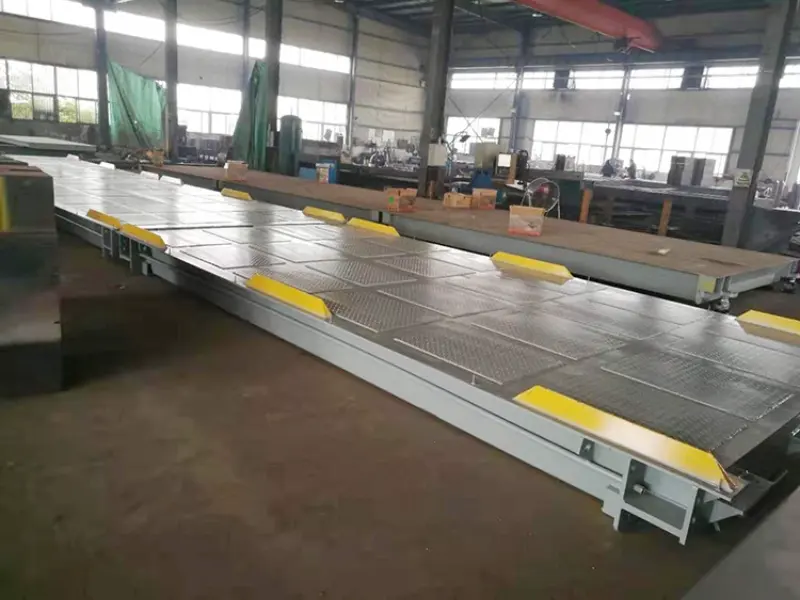
- No foundation pit (above ground): The weighing platform is installed on the ground and requires a ramp.
Advantages: Low construction cost, easy installation and maintenance, and less prone to water accumulation.
Disadvantages: It takes up slightly more space and requires a ramp. The length is sufficient to ensure a gentle ramp, making it convenient for vehicles to get up and down.
Selection criteria:
Site conditions: such as groundwater level, site size, budget
Vehicle type: Is your vehicle a box truck or a trailer? Overlong trailers may require no foundation pit
Local climate: Shallow foundation pits in rainy areas require better drainage design.
2,Environmental factors:
Temperature: Whether the environment used is extremely high or low temperature, it is necessary to choose sensors and instruments with appropriate temperature ranges.
Humidity/corrosiveness: In humid, salt spray, and corrosive gas environments such as beaches and chemical plants, it is necessary to choose a weighbridge with strong anti-corrosion performance. The weighbridge needs to have the following configuration:
Weighbridge platform: Made of stainless steel material and coated with multiple layers of high-performance anti-corrosion paint.
Sensor: Stainless steel laser welded sealed sensor.
Junction box: made of stainless steel material, with high protection level.
Areas with frequent thunderstorms: A comprehensive lightning protection system must be equipped, taking into account sensors, instruments, junction boxes, signal lines, power supplies, etc.
Dust/vibration: Instruments and junction boxes require a high level of protection (IP rating).

Ⅲ、Function and Configuration
1,Weighing instrument (display instrument):
- Basic functions: display weight, tare, reset, store records, etc.
- Advanced features (on-demand selection):
- Data interface: RS232, RS485, USB, Ethernet, 4-20mA analog output, etc., used to connect computers, printers, screens, ERP/MES systems, etc. Identify which external devices you need to connect.
- Storage capacity: How many weighing records can be stored?
- License plate recognition/IC card/RFID: used for automatic vehicle recognition, preventing cheating and improving efficiency.
- Networking/Remote Management: Supports network transmission of data, enabling remote monitoring and management.
- Touch screen/large screen display: convenient for operation and remote reading.
- Anti cheating functions: such as weight locking, infrared positioning, video surveillance linkage, etc.
2,Load cells (core component):
2.1 Type: Digital load cells vs Analog load cells.
Digital load cells : Recommended as the first choice. Strong anti-interference ability (especially for long-distance transmission), stable signal, high accuracy, easy fault diagnosis (each sensor has an independent address), easy angle adjustment (through software), and strong anti cheating ability. The price is slightly higher.
Analog load cells : Mature technology and relatively low cost. Signal transmission is susceptible to interference, especially over long distances, and adjusting the angle difference requires adjusting the potentiometer of the junction box, making troubleshooting relatively complex.
2.2 Quantity and layout: Determine the number and layout of sensors (usually 4-8) based on the size and tonnage of the weighing platform to ensure uniform and stable force distribution.
3,Other accessories:
Large screen display: convenient for drivers or distant personnel to check weight.
Printer: On site printing of weighing documents.
Weighing management software: installed on a computer, used for managing weighing data, generating reports, vehicle management, etc.
Anti slip board/ramp: Ensure the safety of the vehicle when going up and down.
Video surveillance system: Monitor the weighing process, prevent cheating, and retain evidence.
Barrier gates/traffic lights: manage the sequence of vehicle entry and exit.
Ⅳ、Budget, brand, and after-sales service
1,Budget:
The price of weighbridge varies greatly, ranging from tens of thousands to hundreds of thousands. Clearly define your budget range.
Attention: The price includes the equipment itself, shipping costs, installation and commissioning fees, possible land construction costs (shallow foundation pit), accessory fees, etc.
Balance: Within the budget constraints, prioritize ensuring the quality and reliability of core components (weighbridge structure, sensors, instruments). Don’t rely solely on the lowest price as a selection criterion.
2,Brand and Supplier Selection:
Manufacturer Strength: Choose reputable manufacturers with formal factories, production qualifications, technical strength, and scale.
Focus on examining it:
Localization service capability: Do you have local technical personnel? How is the response speed? This is crucial!
Installation and commissioning experience: An experienced installation team is the foundation for stable equipment operation.
After weighbridges service commitment: warranty period, repair response time, spare parts supply situation.
Aizen is a professional manufacturer of weighbridges, with 30 years of experience in weighbridge manufacturing.
With over 120 resellers worldwide and a global sales and service network, Aizen ensures we have highly trained, experienced, and dedicated experts to serve our customers.
We have served 3,000 clients, including those from South Africa, Central Asia, and Southeast Asia, covering various sectors such as mining, agriculture, chemicals, logistics, and highways, and are highly recognized by clients worldwide.
3,After-sales service
It’s of utmost importance! A weighbridge is a long-term equipment, and good after-sales service is the key to ensuring normal operation.
Clear: warranty scope, maintenance costs outside the warranty period, regular inspection services, technical consulting support, etc.
Sign a formal contract: Clearly stipulate product specifications, configurations, prices, payment methods, delivery dates, installation and commissioning responsibilities, acceptance standards, after-sales service terms, etc.
Important reminder:
- Don’t just look at the price. The lowest price often means cutting corners in materials, processes, core components, or services, which may result in higher costs for later use and maintenance.
2. Pay attention to the foundation of land construction。 The foundation is the key to the stability and accuracy of the weighbridge. It is necessary to strictly follow the drawings and requirements provided by the manufacturer during construction to ensure the levelness and bearing capacity of the foundation. Poor basic quality is a common cause of problems with weighbridges, such as large corner errors, jumping, and sinking.
3. Reserve scalability. Consider possible future business changes, such as the need for larger tonnage vehicles and the need to connect new systems, and reserve space appropriately in instrument interfaces, software, and even scale body sizes.4,Regular maintenance and upkeep. Clean, check the limit clearance, and inspect the wiring according to the instructions to extend the service life and ensure accuracy.